Contemporary photography in Aotearoa
Contemporary photography in Aotearoa. Trace the rise of lens-based practice in Aotearoa from documentary roots to staged, conceptual and moving-image work.
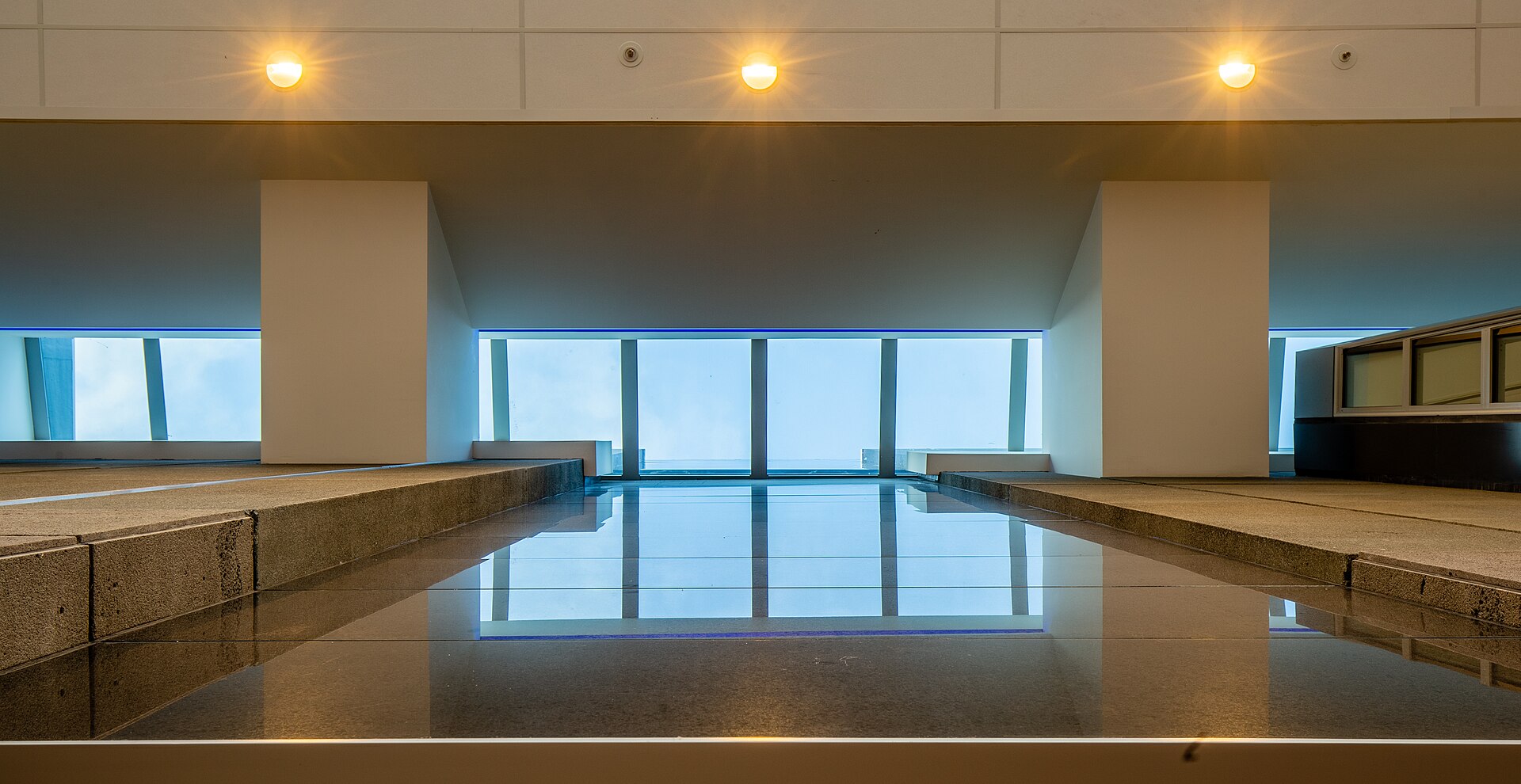

Tracing the lens: Contemporary photography in Aotearoa
To understand contemporary photography in Aotearoa, you must first unlearn the idea that it is a single medium. The most useful framework is to treat lens-based practice not as a genre but as a set of dialogues: with painting, with performance, with Māori and Pacific cultural protocols, and with the screen-based world of digital culture. The key decision rule for any viewer is to ask not “what does this photograph show?” but “what does this photograph do, and what tradition is it answering?” The material below maps the field through its institutions, its key practitioners, and the methods that distinguish one body of work from another. Contemporary photography in Aotearoa is not a medium but a conversation between observational record, staging, digital manipulation, performance, and cultural authority, and the viewer who asks “what does this photograph do?” rather than “what does it show?” will find the field coherent.
How the history of photography in Aotearoa shapes the present
The history of photography in Aotearoa begins with documentary. The first sustained body of work came from Ans Westra, active from the 1960s, whose black-and-white images of Māori life became both celebrated and contested for their outsider perspective. In parallel, John Miller (Ngāpuhi) began documenting Māori protest movements from the 1970s, producing images that were not reportage but acts of witness from within. These two figures establish the first useful distinction: a camera-based record can document a culture, or it can speak from one.
A turning point came in 1989 with the touring exhibition “Imposing Narratives”, curated by Gregory Burke. This show explicitly rejected the observational mode in favour of staged, constructed scenes. It argued that photography could invent rather than record, and it opened the door for the conceptual and performative work that followed. The 1990 exhibition ” Māori Art: The Photography” at Waikato Museum performed a different kind of pivot: it insisted that Māori artists were not merely subjects of the camera but authors of their own image. These two exhibitions, separated by a single year, set the terms for the next three decades.
The institutional framework
Public collections provide the most reliable map of the field. The first major public collection to acquire contemporary New Zealand photography was Auckland Art Gallery Toi o Tāmaki, beginning in the 1980s. Te Papa Tongarewa established a dedicated photography collection in 1993 and now holds approximately 40,000 photographs (per Te Papa’s annual reporting). The significance of these numbers is not quantity but curation: institutional acquisition is the strongest signal that a photographer has entered the historical record.
For a collector or student, the practical checklist is to verify a photographer’s presence in these collections. A work held by Te Papa or Auckland Art Gallery carries a different weight than one shown only in commercial spaces. Similarly, the Marti Friedlander Photographic Award (biennial, administered by Auckland Art Gallery Toi o Tāmaki) is a useful marker of career recognition. Edith Amituanai received it in 2019; she is a key figure for understanding how photography can explore Pasifika diaspora and domestic identity without falling into ethnographic cliché.
What to check before you buy or study a work
Open the collection databases of Auckland Art Gallery and Te Papa. Search the photographer’s name. If the artist appears in both, you are looking at a figure with institutional weight. If they appear in neither, proceed with more caution. Next, check whether the work was acquired directly from the artist or via a dealer, because the acquisition path tells you something about how the market values the work. Finally, look at the acquisition date. A photographer collected early in their career and again a decade later signals sustained institutional attention.
New Zealand contemporary photographers: from record to construction
The shift from documentary to staged practice is not a clean break but a gradual reorientation. Fiona Pardington (Kāi Tahu, Kāti Māmoe, Ngāti Kahungunu) bridges both worlds. Her early work was observational in approach, but her later large-format still lifes of taonga (treasured objects) and her portraits of Māori subjects are deeply staged, lit, and composed. She was awarded an Arts Foundation Laureate in 2016, confirming her place as a senior figure.
Yvonne Todd represents the most extreme version of the staged tableau. Her portraits are unsettling, hyper-real, and deeply artificial; they critique femininity and consumer culture by constructing images that feel both familiar and wrong. Todd won the Walters Prize in 2002, which remains the most significant contemporary art prize in Aotearoa. If you encounter a photograph that looks like a fashion advertisement but makes you uncomfortable, it is likely in her lineage.
Gavin Hipkins works with digital manipulation to create constructed realities that often reference New Zealand’s colonial and natural history. His images are not single photographs but composites, and they force the viewer to ask whether the landscape or figure they see ever existed. This is the dialogue with painting: Hipkins is doing with pixels what Colin McCahon did with paint.
How to distinguish modes at a glance
Walk into a venue and identify the mode before you read the wall text. A single, unmanipulated frame that records an event is likely in the observational tradition. A scene that looks too perfect, too strange, or too composed is staged. A work that combines multiple exposures or digital elements sits in the composite category. A photograph that documents a live act, where the body’s presence is the primary evidence, belongs to performance. Make this call in the first ten seconds. It will anchor everything you see afterwards.
Māori and Pacific lens-based art as the central conversation
This is not a subcategory of contemporary photography in Aotearoa; it is the central conversation. The work of Lisa Reihana (Ngāpuhi, Ngāti Hine, Ngāi Tū) demonstrates how lens-based practice can expand into moving-image installation. Her work “in Pursuit of Venus [infected]”, which debuted at Auckland Art Gallery Toi o Tāmaki in 2015, is a panoramic video that re-stages 18th-century wallpapers of Oceanic encounters, inserting Māori and Pasifika figures as active agents rather than passive subjects. The work is photography, film, and performance at once.
Shigeyuki Kihara uses performance-based lens practice to re-examine Pasifika gender roles and colonial history. Her series “Taualuga: The Last Dance” was acquired by Te Papa in 2006, and it exemplifies the method: the photograph is not the end product but the record of a performed action. The decision rule for the viewer is to look for the evidence of the body in front of the camera, not just the composition within the frame.
Fiona Amundsen works with archival and found photography, often re-photographing historical images of Pasifika missions and colonial encounters. Her practice is about the ethics of looking: what does it mean to take an image that was made by a colonial photographer and re-present it in a contemporary art context? This is the dialogue with history.
The authority question
When a work engages with Māori or Pasifika subject matter, do not assume the photographer has community standing to make it. Check the artist’s biography for iwi or village affiliations. Look for acknowledgements of elders, kaumātua, or community collaborators in the exhibition materials. The gap between “thematic reference” and “cultural authority” is the most common mistake made by newcomers. A photograph that references tikanga without demonstrating relationship to the community it depicts is a different kind of object from one made with explicit permission and participation. Learn to spot the difference before you form an opinion.
Moving-image, digital culture, and the expanded field
The line between still and moving image has dissolved. Shannon Te Ao (Ngāti Tūwharetoa) won the Walters Prize in 2016 with a moving-image installation that used photography as a source material. His work often pairs text, song, and still images to create a slow, contemplative experience that resists the instant consumption typical of digital photography.
For the practical reader, the decision rule is: if a work uses video, projection, or digital display, ask whether the still image is the primary artwork or a document of the artwork. In the case of Lisa Reihana, the video installation is the work; the stills are derivative. In the case of Fiona Pardington, the print is the work, and the camera is the tool. Do not confuse the two.
When to arrive and what to book
Time-based installations at Auckland Art Gallery and Te Papa often run on loops. Arrive at the start of a loop rather than midway through. Check the venue website for the duration of the work before you visit. For popular installations such as Reihana’s, book a timed entry slot if the institution offers one. If you are researching rather than visiting for pleasure, request a viewing of the still-image collection at Te Papa’s reading room; appointments are required and should be made at least a week in advance.
The dialogue with painting and contemporary art in Aotearoa
Contemporary photography in Aotearoa has a specific relationship with painting. Peter Peryer, who had a retrospective at Auckland Art Gallery in 2019, made photographs that are deliberately painterly in their stillness. His images are often of ordinary objects, a pair of scissors, a dead bird, but they are lit and framed with the same care as a still-life painting. The dialogue is explicit: Peryer’s work asks whether photography can achieve the same level of contemplation as a painted canvas.
Yvonne Todd is the inverse: her work borrows from commercial photography and advertising, not from painting. The viewer should decide which tradition a given photographer is answering, because that decision determines how to evaluate the work. This question of lineage also connects lens-based practice to the wider field of contemporary art in Aotearoa. The Walters Prize, awarded to Todd in 2002 and to Te Ao in 2016, treats photography and moving-image work on equal terms with painting, sculpture, and installation. That parity is now settled.
Skip the gift shop, visit the reading room
Most visitors to Auckland Art Gallery spend time in the store after seeing the exhibitions. Skip it. Instead, walk to the E H McCormick Research Library on the ground floor. It holds artist files on Peryer, Pardington, Todd, and Reihana that include exhibition catalogues, reviews, and ephemera not available online. Entry is free, no booking is required during opening hours, and the files give you the critical reception history that wall texts omit.
How to approach a work
The method is straightforward. Look at the image and ask four questions in order:
- What is the mode? Observational record, staged tableau, digital composite, or performance document? Each mode has its own criteria for success.
- What tradition is it answering? Painting (Peryer), advertising (Todd), community witness (Miller), performance (Kihara), or archival history (Amundsen)?
- What is the cultural context? If the work engages with Māori or Pasifika subject matter, has it been made with appropriate community authority?
- What is the institutional presence? Is the photographer in Te Papa’s collection? Have they received a major award? Institutional recognition is not a substitute for aesthetic judgment, but it is the most reliable anchor in a thin market.
The institution that holds a photograph, the tradition it answers, and the cultural protocols it respects are more important than any single image.
More in this guide
Contemporary art in AotearoaA guide to New Zealand contemporary artDigital art.
Read next
-
 A guide to New Zealand contemporary art
Contemporary art in Aotearoa New Zealand is not a smaller version of New York or London.
-
 Approaching Māori contemporary art
Contemporary art in Aotearoa New Zealand is not a smaller version of the New York or London art world.
-
 Pacific art in Aotearoa
 is not one movement with a single style. It is a set of distinct conversations, each tied to specific island nations, diaspora experiences, and urban histories.
-
 How to research a New Zealand artist
Researching a New Zealand artist is not like looking up a painter in a European or American auction database.
-
 Choosing art for your space
 in Aotearoa New Zealand is rarely about matching a sofa.