Sculpture
Sculpture in Aotearoa New Zealand is not a single medium but a conversation about land, identity, and the body.
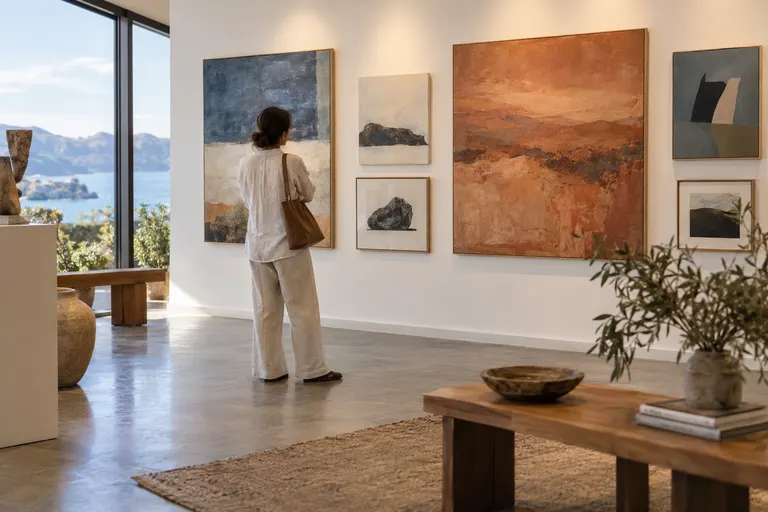
Sculpture in Aotearoa New Zealand is not a single medium but a conversation about land, identity, and the body. From the carved forms of the Māori and Pacific traditions that predate European arrival to the conceptual works shown at the Venice Biennale, sculpture here carries a cultural weight that a plinth alone cannot hold. The practical realities of collecting and displaying sculpture follow from that weight: material, scale, installation, maintenance, and the cultural protocols that shape how a work is seen and sited.
Material and medium
Sculpture in Aotearoa spans a wide range. Common media include bronze, stone, wood, steel, aluminium, concrete, ceramic, glass, and found or mixed elements. Contemporary artists often combine these, as in the work of Francis Upritchard, whose hand-crafted figures use polymer clays, textiles, and metal armatures; or Michael Parekōwhai, whose “Uncle Bull” series re-creates a 1930s American sculpture in painted fibreglass, a choice that deliberately complicates ideas of original and copy. Māori carving (whakairo) traditionally uses native woods such as tōtara and kauri, while Pacific sculpture often employs fibre, tapa cloth, and carved wood. When you are assessing a work, the substance determines its care needs, its weight, and its likely lifespan outdoors.
Why the medium matters before you buy
The medium of a sculpture is the first determinant of its weight, stability, and care needs. Stone and bronze are dense and heavy; a 50-centimetre bronze may weigh 30 to 50 kilograms, while a similar-sized work in plaster or resin might weigh under 5 kilograms. The artist’s choice is not decorative: it affects how the work is transported, where it can be shown, and how it will age. Ask the gallery or artist for the exact composition, and confirm whether the work includes mixed elements that require different cleaning or humidity conditions.
Traditional media and cultural authority
For taonga (treasured items), the cultural context of a work can outweigh its physical condition. Te Papa Tongarewa conservation guidelines (2021) note that a work that has been restored may lose some of its original authority even if the physical damage is repaired. This has direct consequences for collectors: a carved pounamu pendant with visible wear may hold more standing than a pristine replacement. Before cleaning, repairing, or altering any work with Māori or Pacific heritage, consult the artist, the source community, or a qualified cultural advisor. The decision is not yours alone.
Scale and weight
Sculpture ranges from tabletop pieces under 30 cm to monumental public works. Weight is not always proportional to size: a large hollow bronze can weigh less than a dense small stone. Before purchase, ask the gallery or artist for the exact dimensions and weight in kilograms, and check whether the work arrives with a plinth, base, or mounting system. For outdoor works, confirm that the construction is rated for the local climate, including coastal salt air and UV exposure. If a work is too heavy to move safely by two people, plan for professional rigging and a structural assessment of the floor or wall.
Indoor and outdoor suitability
A sculpture made for a living room will not survive a coastal garden. Outdoor works need to withstand rain, wind, salt, and temperature swings. Bronze develops a patina that can be controlled but not stopped. Untreated steel rusts. Wood cracks. Painted fibreglass fades under UV. Ask the artist or fabricator for a written statement of outdoor rating. If none exists, assume the work is indoor-only. For works sited near the sea, even “outdoor-rated” metals need a maintenance schedule. Rinse salt spray off bronze and stainless steel every three months with fresh water, and reapply protective wax annually. Source: Te Papa Tongarewa conservation guidelines, 2021.
Installation and stability
A sculpture must stand safely. Freestanding works need a level floor and, in earthquake-prone regions, seismic restraints. Wall-mounted reliefs require fixings rated for the substrate (timber stud, concrete, brick) and the work’s weight plus a safety margin. Outdoor works on grass or soil need a poured foundation or a compacted gravel pad to prevent sinking. If the work is tall and narrow, a weighted base or ground anchor is essential. For any work over head height or weighing more than 50 kg, hire a professional art installer with public liability insurance. The gallery that sold the work can usually recommend one.
Plinths, bases, and mounts
Some works arrive with a dedicated plinth; most do not. A plinth must be heavy enough to resist tipping and wide enough that the work does not overhang. For a top-heavy bronze, the plinth should weigh at least the same as the sculpture itself. Timber plinths suit indoor use only. Concrete or steel plinths work outdoors but may stain light-coloured paving. Ask the artist whether the work is designed to be bolted down or to sit free. Never drill into a sculpture to secure it unless the artist or fabricator specifies the method and location.
Maintenance and conservation
Every material degrades. The goal of maintenance is to slow the process without altering the work’s surface or meaning. Dust indoor sculpture with a soft, dry microfibre cloth. Do not use household cleaners, polishes, or water unless the artist or conservator has approved a specific product and method. For outdoor bronze, follow the artist’s patina instructions. Some artists intend the patina to evolve; others seal it. Removing a deliberate patina can destroy a significant portion of the work’s value. If a work is damaged, do not attempt a home repair. Contact a qualified conservator. Te Papa Tongarewa maintains a list of accredited conservators and can advise on finding one.
When restoration changes the work
The Te Papa conservation guidelines (2021) are explicit: for taonga, restoration can reduce cultural authority even when it improves physical condition. This principle increasingly applies to contemporary works with cultural content. A cracked carving by a living Māori artist may carry more weight in its damaged state than after an invisible repair. Before authorising any conservation treatment, ask three questions. Does the artist have a stated preference? Does the work’s meaning depend on its original surface? Will the treatment be reversible? If the answer to the third question is no, pause.
The market for sculpture in Aotearoa
Auckland Art Gallery Toi o Tāmaki (2023) describes the market for contemporary New Zealand art as “thin but genuine,” with a small number of serious collectors and a strong preference for works with clear provenance and exhibition history. Sculpture is a smaller segment again within that market, partly because of the practical demands of weight, space, and installation. The result is that good sculpture can be surprisingly affordable at the primary level, but resale is slower than for painting. Buy because you want to live with the work, not because you expect a quick return.
Where sculpture is bought and sold
The dealer gallery model drives the primary market. Commercial galleries such as Starkwhite, Michael Lett, and Bartley + Company represent living artists and sell new work directly to collectors. Auction houses including Webb’s and Art + Object handle secondary-market sculpture, often from deceased estates. Public institutions occasionally deaccession works, but this is rare and tightly governed. Creative New Zealand (2022) reports that public funding for the arts has remained stable in nominal terms, but the real value of individual project grants has declined by roughly 12% since 2019, which has pushed more artists toward commercial galleries and private commissions. For the buyer, this means more work is available through galleries than a decade ago, but prices at the primary level have risen to reflect the artist’s full cost of production.
Provenance and cultural authority
A 2021 report by the Museum of New Zealand Te Papa Tongarewa states that works by Māori artists are increasingly acquired by international museums, but that provenance and cultural authority are the deciding factors for institutions, not market price. For the private collector, this means documentation is everything. Keep every invoice, gallery certificate, exhibition catalogue, and artist correspondence. If the work has a known exhibition history, ask the seller for a written list. A work with a traceable path from the artist’s studio to your wall is worth more, and is easier to resell, than one with gaps in its history.
Cultural protocols for Māori and Pacific sculpture
Māori and Pacific sculpture are not simply aesthetic objects. They carry whakapapa (genealogy), mana (authority), and kōrero (narratives) that affect how they are displayed, handled, and spoken about. These protocols are not optional courtesies; they are requirements that arise from the work’s status as taonga. If you own or are considering buying a carved pou, a woven tukutuku panel, a pounamu work, or any object made by a Māori or Pacific artist using traditional techniques, you need to understand what that status requires.
Display and placement
Height matters. In many Māori contexts, taonga are placed above the level of the human body, never on the floor. Food and drink should be kept separate from taonga; a work should not be displayed in a kitchen or dining area without specific guidance. Some works are tapu (restricted) and cannot be touched or handled by certain people. The artist, the source community, or a kaumātua (elder) can advise on the specific protocols for a given work. Do not assume that because a work was sold through a commercial gallery, no protocols apply. Ask before you buy.
Handling and care
Handle taonga with clean hands or, where protocol requires, gloved hands. Some works should be handled only by people of a particular gender or status; this is not a generalisation but a specific cultural rule that varies by iwi (tribe) and work. If you are lending or transporting a taonga, the borrowing institution will usually require a cultural advisor’s report. Plan for this cost. It is not a formality; it is part of the work’s ongoing life.
The legacy of Pah Homestead and the former Wallace Arts Centre
Pah Homestead is the historic mansion in Hillsborough, Auckland, that housed the Wallace Arts Centre. The former Wallace Arts Centre at Pah Homestead was operated by the Wallace Arts Trust, a private trust. The Trust ceased operating the centre in 2024; its collection is now dispersed. The building and its grounds remain a physical reference point for understanding how sculpture is displayed in a domestic-heritage setting, and many works that once hung or stood there are now in private hands. If you encounter a work with a Wallace Arts Trust provenance, the dispersal means that documentation may be fragmented. Verify the chain of ownership carefully, and contact the former trust’s archivists if a gap appears.
Sculpture in the wider art landscape
The term “sculpture” is used broadly to include freestanding works in the round, relief works attached to a wall or base, assemblages and readymades where everyday objects are combined or repositioned, and installation art that may occupy an entire room or outdoor area. Aotearoa has a strong sculptural tradition, from the carved meeting houses of Māori art to the large-scale public works of contemporary artists such as Michael Parekōwhai. The “Auckland School” is a term used by art historians to describe a loose grouping of mid-century figurative painters, including Rita Angus and Colin McCahon, who developed a recognisably local modernist idiom. “Māori Modernist” is a retrospective label applied to artists such as Ralph Hotere, who combined international modernism with Māori visual culture. The “Pacific” or “Pasifika” art movement refers to contemporary work by artists of Pacific Island heritage, often addressing diaspora, identity, and colonial history. Sculpture sits within all of these currents, and a work’s meaning often depends on knowing which current it comes from.
Read next
-
Ceramic art
Ceramic art in Aotearoa New Zealand sits at a distinct intersection: it is at once a hands-on craft with ancient Pacific and Māori whakapapa, a material conversation in contemporary art…
-
Painting
Painting in Aotearoa New Zealand is not a single market or a single style.
-
Works on paper
Works on paper is the quiet backbone of almost every serious art collection in Aotearoa New Zealand.
-
Fine-art prints
A fine-art print is not a poster, an inkjet copy of an oil painting, or a page torn from a book.
-
Photography
Photography in Aotearoa New Zealand occupies a distinctive place in the art market, one where the physical object is only part of the story.
-
Textile art
Textile art in Aotearoa New Zealand is a distinct field of contemporary practice that spans traditional Māori weaving, Pacific fibre work, and experimental fibre-based sculpture.